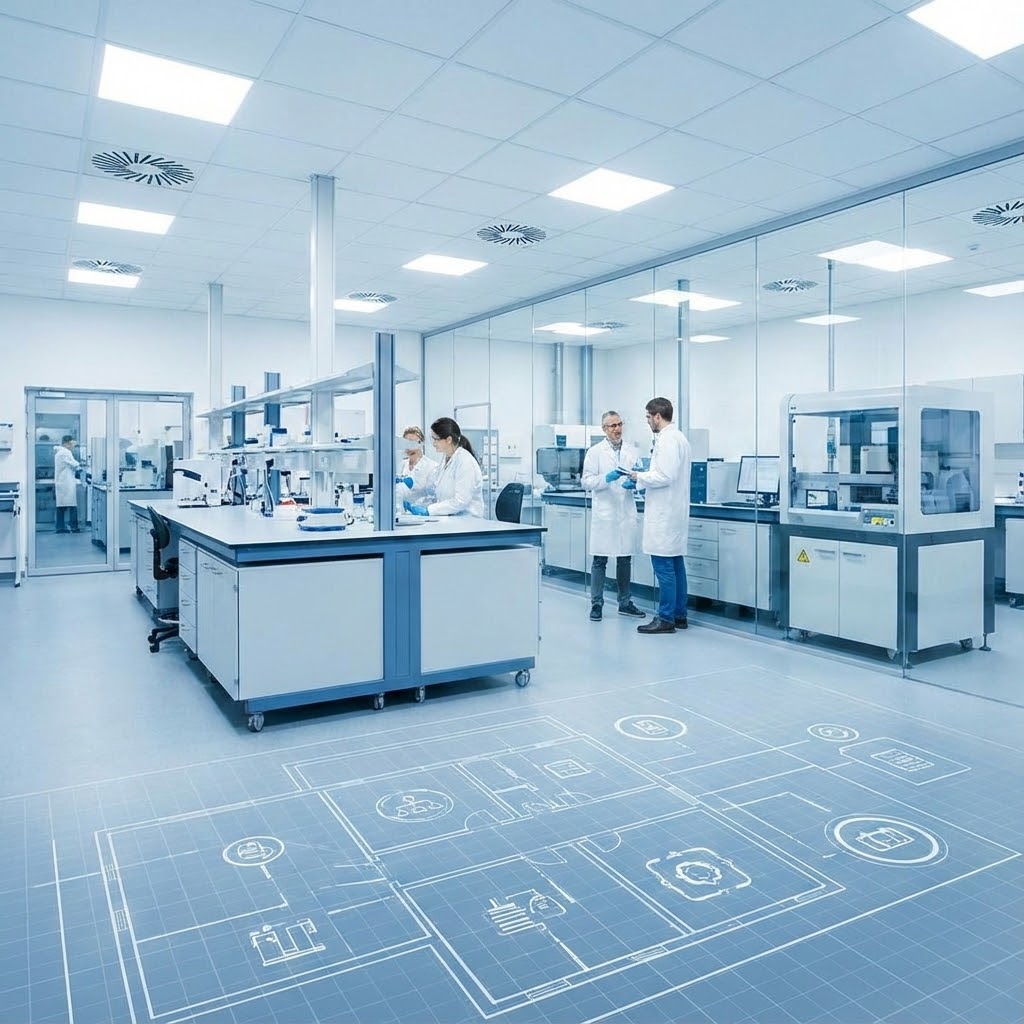
A laboratory’s layout is far more than an architectural decision; it is a strategic driver of scientific performance, operational efficiency, and researcher safety. The way a lab is physically organized affects every aspect of daily workflow, from how quickly teams move between tasks to how effectively equipment integrates into broader experimental processes. A well-designed layout enables precision, productivity, and collaboration; a poorly designed one introduces friction, delays, hazards, and unnecessary complexity.
As science becomes increasingly automated, interconnected, and data-driven, the importance of thoughtful lab layout design continues to grow. Modern labs must accommodate robotics, specialized HVAC requirements, evolving workflows, dynamic research teams, and an array of instruments that differ widely in size, sensitivity, and utility. The goal is not simply to fit equipment into a space; it is to create an environment where science can operate at its highest possible level.
Designing for Workflow Efficiency
Scientific workflows depend heavily on physical flow within the lab. Researchers, equipment, consumables, and samples all move through a sequence of steps that must be supported by logical, efficient spatial organization.
Effective layouts:
- Minimize unnecessary movement
- Reduce time between stages of an experiment
- Keep frequently used tools within immediate reach
- Position equipment to support natural process order
- Ensure that adjacent workstations complement each other
When workflows are aligned with physical space, researchers spend less time navigating complexity and more time focused on scientific tasks. Over time, even small efficiencies compound, dramatically improving the lab’s operational rhythm.
Supporting Flexibility and Future Growth
Scientific priorities evolve quickly, and labs must be ready to adapt. A layout designed around rigid assumptions quickly becomes outdated as new technologies, methodologies, or experimental demands emerge.
Flexible lab design incorporates:
- Modular furniture and workstations
- Reconfigurable benching
- Overhead utility carriers that reduce reliance on fixed infrastructure
- Space allocation that anticipates future equipment
- Power, data, and plumbing designed for scalability
This flexibility ensures that labs can integrate new technologies, such as advanced automation, specialized instrumentation, or expanded workflows, without costly reconstruction or operational disruption.
Enhancing Safety Through Intentional Design
Safety is a foundational requirement in every laboratory, and layout plays a decisive role in supporting safe behavior and hazard mitigation. Thoughtful design helps prevent accidents, reduce exposure risks, and ensure compliance with biosafety, chemical handling, and environmental health standards.
Safety-centered layout features include:
- Clear separation between hazardous and non-hazardous zones
- Adequate spacing around fume hoods, biosafety cabinets, and exhaust systems
- Proper placement of emergency equipment such as eyewash stations and safety showers
- Unobstructed egress paths
- Logical storage areas for chemicals and biological materials
- Strategic placement of ventilation and exhaust points
A well-designed layout reduces the risk of collisions, contamination, or accidental exposure, supporting a safe environment for personnel and protecting the integrity of scientific work.
Optimizing Equipment Placement for Performance and Uptime
Equipment performance often depends on environmental conditions and proper spatial orientation. Certain instruments require controlled temperature zones, stable airflow, vibration isolation, or direct access to utilities. Others must be placed in proximity to complementary systems to support integrated workflows.
Thoughtful placement ensures:
- HVAC systems serve sensitive areas effectively
- Heat-generating equipment does not interfere with temperature-sensitive devices
- Robotic systems have adequate clearance for motion
- High-use instruments are positioned to prevent bottlenecks
- Support equipment (water, vacuums, gases) is accessible and unobstructed
When equipment placement is aligned with operational needs, labs experience fewer performance issues, less downtime, and smoother integration across systems.
Improving Collaboration and Scientific Communication
Lab design influences not only how work is performed, but how teams interact. Modern research is increasingly collaborative, requiring shared access to equipment, overlapping workflows, and frequent communication.
Strategic layout decisions can:
- Encourage efficient team coordination
- Reduce crowding in high-traffic areas
- Support shared instrument zones
- Maintain appropriate separation between conflicting workflows
- Foster an environment that balances openness with safety
Layout becomes a tool for enhancing communication while ensuring that teams can work concurrently without interference.
Integrating Environmental Control Into Layout Planning
Environmental stability, airflow, temperature, humidity, pressure, and contamination control are inseparable from lab layout. Poor spatial planning can strain HVAC systems, create uneven environmental conditions, or compromise containment zones.
Integrated layout planning:
- Aligns workstation placement with airflow patterns
- Ensures sensitive equipment is shielded from turbulence
- Maintains proper pressurization between lab zones
- Prevents cross-contamination between workflows
- Supports the performance of biosafety and fume containment systems
By designing with environmental performance in mind, labs achieve greater stability and consistency.
Preparing Labs for Automation and Digital Workflows
Automation is rapidly reshaping laboratory operations, and layout plays a central role in supporting robotic systems, digital monitoring tools, and connected equipment. These technologies require clear floor paths, optimized bench height, accessible utilities, and uninterrupted communication networks.
Future-forward layouts accommodate:
- Robotic arms and automated liquid handlers
- Plate hotels and storage systems
- Integrated conveyor or track systems
- Real-time monitoring sensors
- Data cabling, Wi-Fi coverage, and power distribution for high-load devices
Labs designed for automation achieve higher throughput, reduced variability, and more predictable scientific output.
Final Thoughts
The layout of a laboratory is more than an arrangement of benches and equipment; it is an operational strategy that determines how effectively science can be performed. By prioritizing workflow efficiency, safety, flexibility, equipment performance, environmental stability, and future scalability, labs create spaces that empower researchers and support high-quality, uninterrupted scientific work.
A well-designed layout transforms a lab from a physical location into a high-performance scientific engine. As research demands continue to evolve, the importance of intentional, forward-looking lab design will only continue to grow.
 Ventures Done