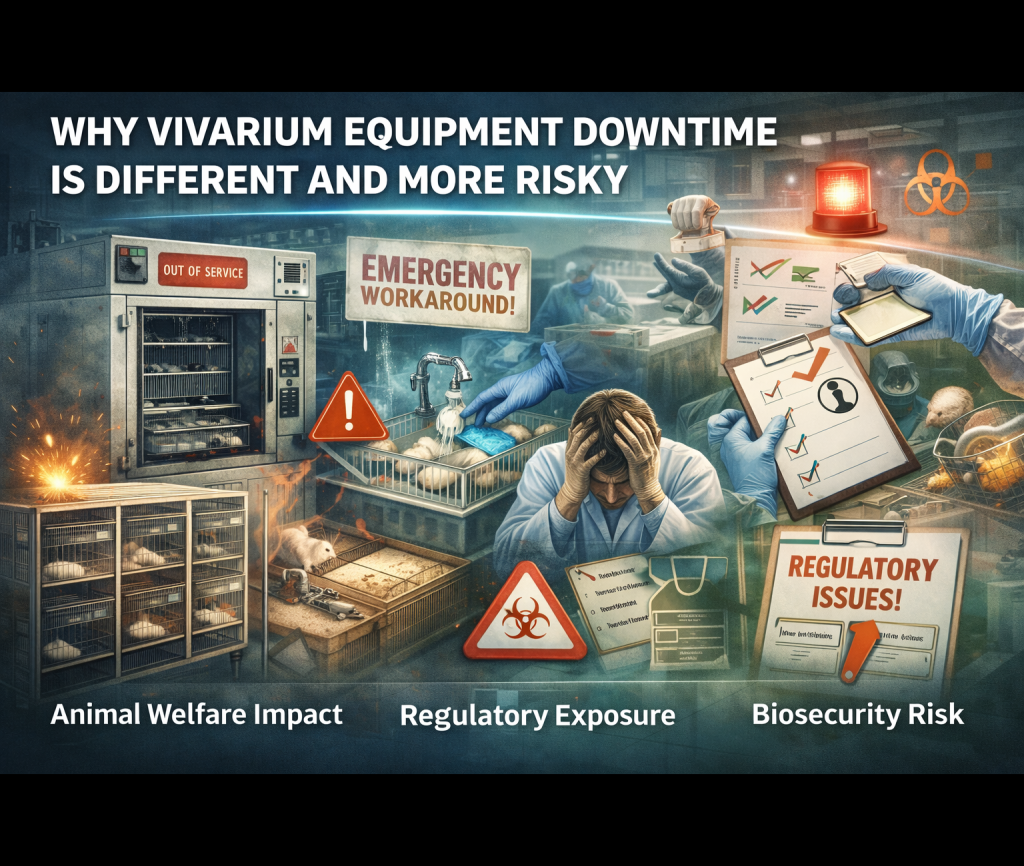
Downtime in any laboratory environment is disruptive, but in vivarium operations, the consequences are fundamentally different. Vivariums operate continuously, support living systems, and are governed by strict regulatory, ethical, and welfare requirements. When critical equipment fails, the impact is immediate and far-reaching.
Cage washers, rack washers, autoclaves, environmental controls, and HVAC systems form the backbone of vivarium operations. Downtime in these systems does not simply delay work. It can compromise animal welfare, halt research programs, and create regulatory exposure that extends well beyond the facility itself.
Continuous Operations Leave No Margin for Failure
Unlike many research labs, vivariums cannot pause operations while equipment is repaired. Animals require consistent care, sanitation, environmental control, and monitoring regardless of equipment status.
When a critical system goes offline, facilities teams are often forced into emergency workarounds that increase labor, introduce risk, and strain personnel. Even short interruptions can escalate quickly when redundancy is limited or workflows are tightly coupled.
This continuous operational demand makes proactive reliability far more important than reactive repair.
Sanitation and Biosecurity Depend on Equipment Availability
Wash and sterilization systems are essential to maintaining biosecurity in vivarium environments. Cage washers and autoclaves support daily sanitation cycles that prevent contamination, disease transmission, and environmental degradation.
When these systems fail, manual alternatives are often inadequate, labor-intensive, or unsustainable beyond a very short window. Extended downtime increases the risk of cross-contamination and can compromise the controlled conditions required for animal health and research integrity.
Reliability in wash and sterilization systems is therefore a core vivarium requirement, not a convenience.
Environmental Stability Is Non-Negotiable
Temperature, humidity, airflow, and pressure relationships are tightly controlled in vivariums to support animal welfare and experimental consistency. HVAC failures or control instability can quickly push environments outside acceptable limits.
Unlike general lab spaces, vivarium environments often require higher air change rates, precise pressurization, and continuous monitoring. Downtime or drift in these systems can force rapid operational decisions that affect both animals and ongoing research.
Preventing environmental failures is one of the most critical aspects of vivarium equipment strategy.
Regulatory and Ethical Implications Amplify Risk
Vivarium operations are subject to rigorous oversight and documentation requirements. Equipment failures that affect animal care or environmental conditions can trigger reporting obligations, corrective action plans, and regulatory scrutiny.
Even when animals are not directly harmed, repeated or poorly managed downtime can raise concerns about facility reliability and operational control. This risk extends beyond operations and can affect institutional reputation and research timelines.
Maintaining uptime is therefore not just an operational concern, but a compliance and governance priority.
The Importance of Redundancy and Serviceability
Because downtime risk is so high, vivarium equipment strategies must prioritize redundancy, serviceability, and rapid recovery. Systems designed with accessible components, readily available parts, and clear maintenance pathways allow teams to respond quickly when issues arise.
Preventative maintenance programs, spare parts strategies, and realistic throughput planning all play a role in ensuring that equipment failures do not escalate into operational crises.
Final Thoughts
Vivarium equipment downtime carries consequences that extend far beyond delayed work. It affects animal welfare, scientific integrity, regulatory compliance, and institutional risk. The continuous nature of vivarium operations leaves little margin for failure, making reliability and preventative maintenance essential.
By recognizing how vivarium downtime differs from other lab environments, facilities can design systems, maintenance programs, and equipment strategies that protect both science and the living systems it depends on.
 Ventures Done