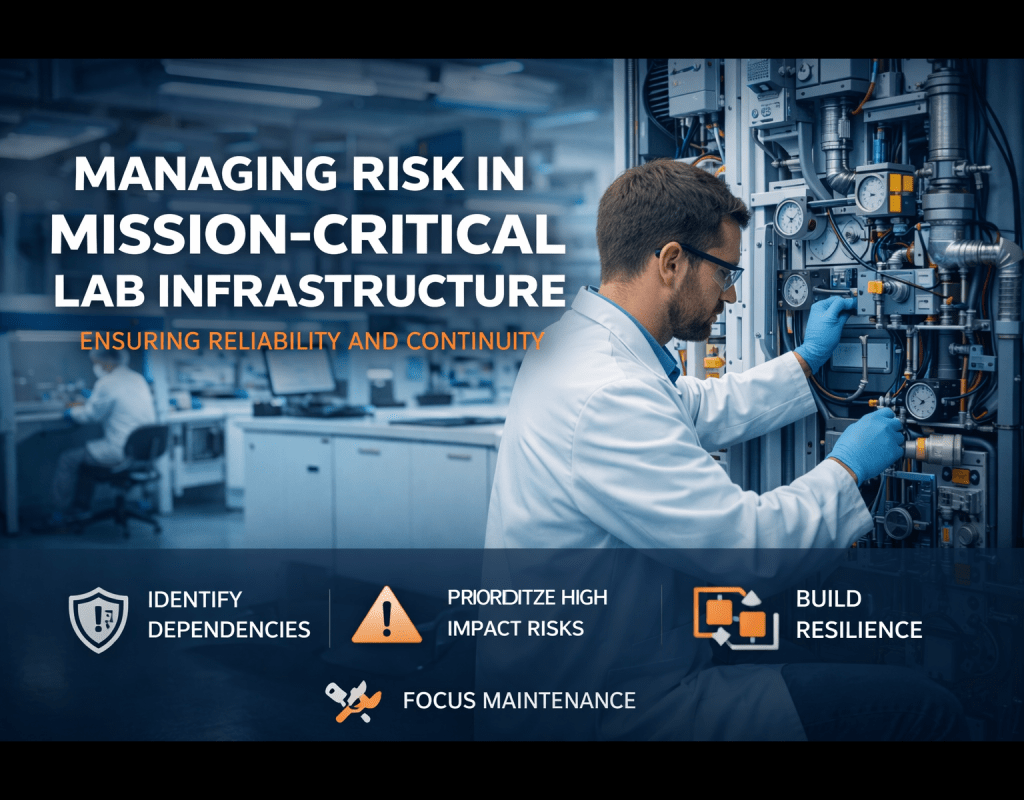
Modern laboratories depend on infrastructure systems that must perform reliably at all times. HVAC, electrical distribution, sterilization equipment, wash systems, automation platforms, and environmental controls all operate as interconnected components of a larger ecosystem. When one system fails, the impact rarely stays contained. Instead, failures propagate across workflows, teams, and research programs.
Managing risk in mission-critical lab infrastructure requires a shift from reactive problem-solving to proactive operational strategy. The goal is not simply to respond to failures, but to anticipate them, reduce their likelihood, and minimize their impact when they occur.
Understanding Mission-Critical Dependencies
Mission-critical systems are those whose failure would halt research, compromise safety, or create regulatory exposure. In many labs, these systems are tightly coupled. Washers depend on utilities and HVAC. Automation platforms depend on environmental stability and power quality. Vivarium operations depend on sanitation, airflow, and redundancy.
Risk management begins with understanding these dependencies. Mapping how systems interact allows facilities and operations teams to identify single points of failure and areas where redundancy or operational flexibility is limited.
Moving Beyond Reactive Maintenance
Reactive maintenance treats failures as isolated events. While this approach may resolve immediate issues, it does little to reduce future risk. Over time, reactive strategies increase downtime, inflate costs, and erode confidence in infrastructure reliability.
Proactive risk management emphasizes preventative maintenance, trend analysis, and early intervention. Equipment histories, alarm data, and performance metrics provide valuable insight into emerging risks long before failures occur. Addressing issues early reduces both the frequency and severity of disruptions.
Prioritizing Risk Based on Impact
Not all failures carry the same consequences. A failed accessory may be inconvenient, while a failed environmental control system can shut down entire research programs. Effective risk management prioritizes resources based on impact rather than frequency alone.
Evaluating both likelihood and consequence allows teams to focus on the systems that matter most. High-impact systems warrant more rigorous maintenance, monitoring, and contingency planning than lower-risk assets.
Building Resilience Through Redundancy and Serviceability
Resilience is the ability to recover quickly when failures occur. In mission-critical environments, resilience often depends on redundancy, serviceability, and access to replacement components.
Redundant capacity, whether through backup systems or parallel workflows, reduces the risk of total shutdown. Serviceable designs allow faster repairs and shorter outages. Readily available parts and clear service procedures further reduce recovery time.
Together, these elements transform failures from crises into manageable events.
Aligning Infrastructure Strategy With Scientific Demand
Infrastructure risk cannot be managed in isolation from scientific operations. Research programs evolve, throughput requirements change, and utilization patterns shift over time. Infrastructure strategies must adapt accordingly.
Regular communication between facilities, operations, and scientific teams ensures that infrastructure capacity and reliability align with current and future needs. This alignment prevents underestimating risk during periods of growth or program transition.
Final Thoughts
Managing risk in mission-critical lab infrastructure is an ongoing process, not a one-time assessment. By understanding system dependencies, prioritizing high-impact risks, investing in preventative maintenance, and building operational resilience, labs can protect scientific continuity and reduce the disruptive impact of failures.
Reliable infrastructure enables reliable science. Risk management ensures that reliability is sustained over time.
 Ventures Done