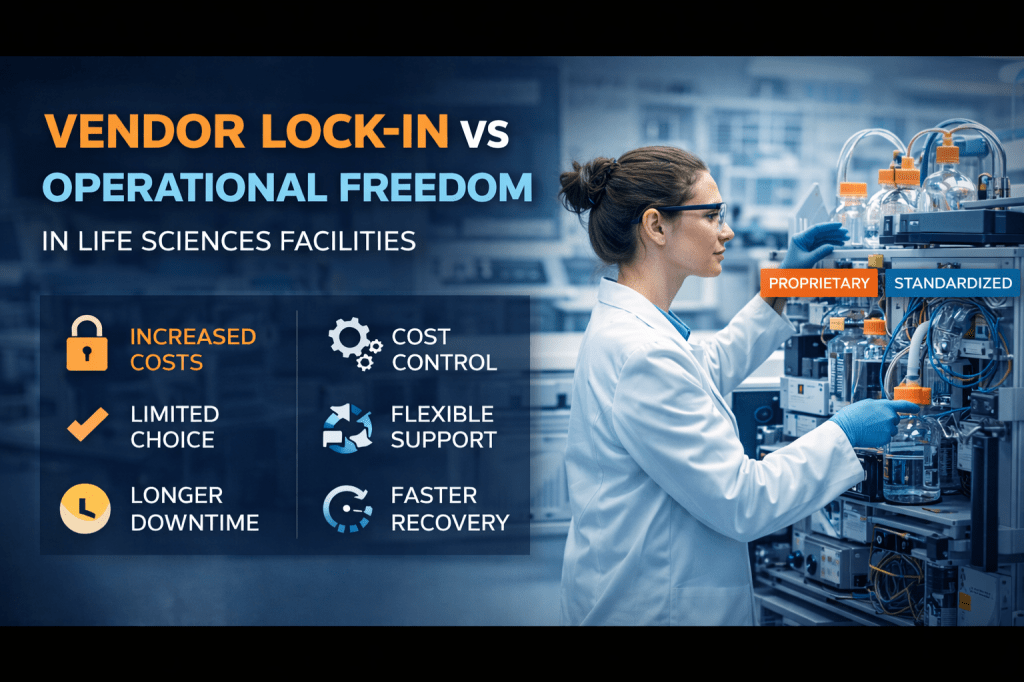
Life sciences facilities rely on a wide range of specialized equipment and systems, many of which are sourced from a small number of vendors. While vendor partnerships can deliver performance and integration benefits, they can also introduce long-term constraints that affect flexibility, cost, and uptime.
Vendor lock-in occurs when equipment design, software, or service models limit a facility’s ability to source parts, perform maintenance, or adapt systems without reliance on a single supplier. Operational freedom, by contrast, allows facilities to make decisions based on performance, availability, and risk rather than contractual limitations.
How Vendor Lock-In Develops
Vendor lock-in often emerges gradually. Proprietary components, restricted software access, exclusive service agreements, and closed control architectures can all limit flexibility over time. Initially, these constraints may not appear problematic, particularly when equipment is new and fully supported.
As systems age, however, lock-in becomes more apparent. Parts lead times increase, service costs rise, and options for repair or modification narrow. What once seemed efficient can become a source of operational risk.
The Impact on Uptime and Cost
Vendor lock-in directly affects equipment uptime. When only a single supplier can provide parts or service, even minor failures can result in extended downtime. Supply chain disruptions, staffing shortages, or product discontinuations further amplify this risk.
Costs also escalate. Limited competition reduces pricing leverage, and emergency service becomes the default response. Over the life of an asset, these costs often exceed initial purchase savings.
Operational Freedom as a Strategic Advantage
Operational freedom allows facilities to respond quickly and flexibly to changing conditions. Equipment designed with standardized components, open control systems, and accessible service documentation can be maintained by multiple providers and supported through diverse supply chains.
This flexibility reduces downtime, lowers long-term cost, and improves resilience. It also enables facilities to adapt workflows, integrate new technologies, and extend asset life without being constrained by vendor limitations.
Balancing Performance With Flexibility
Operational freedom does not require avoiding all proprietary solutions. Some applications demand specialized designs to achieve necessary performance. The key is balance.
Facilities benefit most when proprietary elements are limited to truly essential functions and paired with serviceable, standardized supporting systems. Evaluating long-term support commitments and component availability during procurement helps avoid unintended lock-in.
Procurement Decisions Shape Long-Term Outcomes
Vendor lock-in is often determined at the point of purchase. Procurement decisions that focus solely on upfront cost or performance specifications may overlook long-term operational implications.
Including serviceability, parts accessibility, and support flexibility in selection criteria ensures that equipment continues to serve the facility effectively throughout its lifecycle.
Final Thoughts
Vendor lock-in and operational freedom represent fundamentally different approaches to infrastructure strategy. While vendor-centric models may offer short-term convenience, operational freedom provides long-term resilience, cost control, and adaptability.
Facilities that prioritize flexibility alongside performance are better positioned to maintain uptime, manage risk, and support evolving scientific demands.
 Ventures Done